
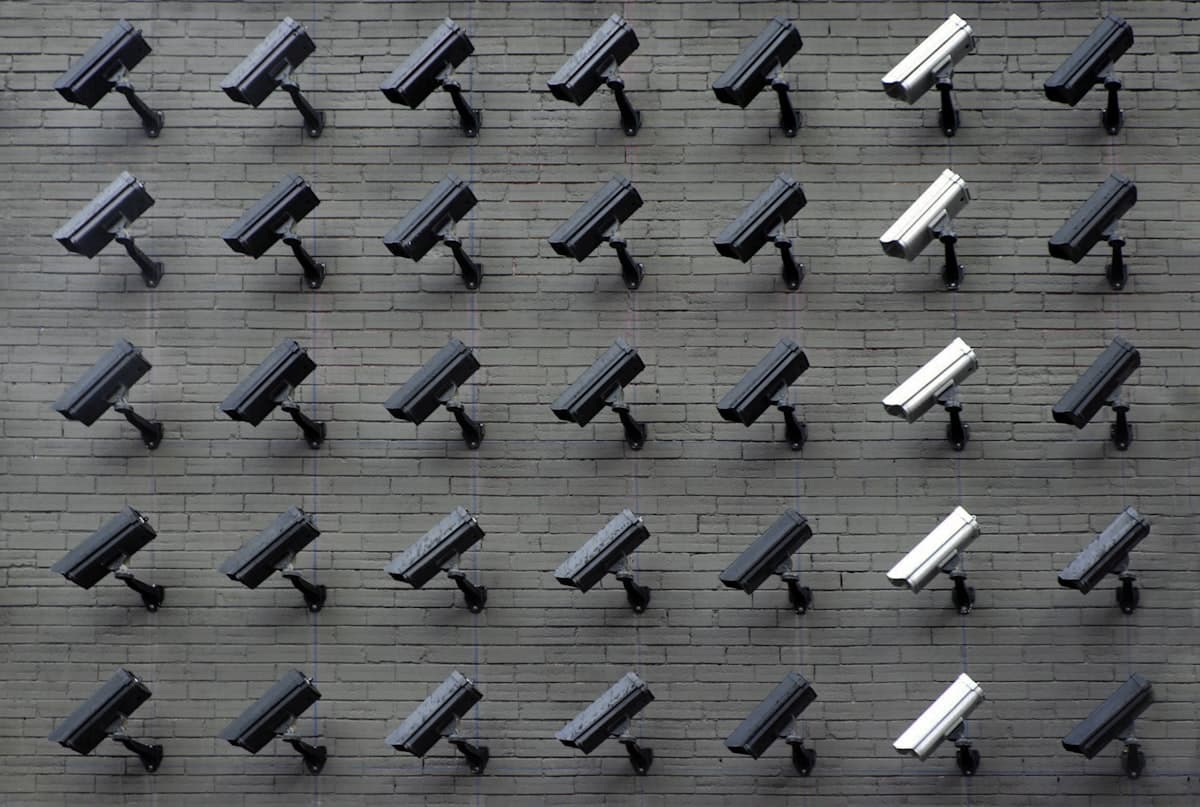
The Invisible Eye
On March 4, 2026, NPR published an in-depth investigation into the full scope of the surveillance system that Immigration and Customs Enforcement (ICE) has built. Facial recognition apps, location-tracking software, license plate readers, drones, and social media monitoring — each of these technologies was introduced at a different time, but today they operate as though woven into a single, enormous net. The Department of Homeland Security (DHS) secured roughly $165 billion in additional funding through the One Big Beautiful Bill Act, enacted in 2025. A substantial share of that budget is going toward purchasing surveillance technology and contracting with private vendors. The nonprofit outlet State of Surveillance published a guide analyzing the full range of surveillance tools ICE possesses, documenting the scale of this investment in detail. The problem is that this net is not aimed only at undocumented immigrants. Protesters, journalists, attorneys, and even U.S. citizens are being caught in it as well.
A Suspect List Built by Algorithm
In April 2025, ICE signed a roughly $30 million contract with Palantir Technologies to develop the ImmigrationOS surveillance platform, with a prototype due for delivery by that September. The platform's core feature is ELITE (Enhanced Leads Identification and Targeting for Enforcement). One ICE agent described this app, which has been deployed operationally since June 2025, as "like Google Maps." It displays the locations of deportation targets on a map and generates a probability score for how likely each target is to live at a given address. Agents use that score to decide where to carry out operations. ELITE also has the capability to generate a comprehensive report on an individual on the spot, in the field.
What sets ELITE apart from a simple address book is the breadth of its data sources. It draws not only on DHS's internal information systems but also on Medicaid enrollment records. In January 2026, Fortune and the Electronic Frontier Foundation (EFF) reported that a tool developed by Palantir is using Medicaid data to track arrest targets. Enrollment in health insurance has become a lead for deportation. The address submitted to access hospital care ends up matching the address written on an ICE arrest warrant. This follows the same pattern as the existing information-sharing memorandum of understanding (MOU) between the Internal Revenue Service (IRS) and DHS: personal information originally submitted for welfare or tax purposes is being repurposed for immigration enforcement.
On top of this, ICE has been signing skip-tracing contracts with private companies since December 2025. Skip tracing is a private investigative technique used to locate people whose whereabouts are unknown. According to The Washington Post, this program aims to track up to 50,000 immigrants per month, with private investigators confirming targets' homes and workplaces through voter registration data, online information, and physical surveillance in the field.
Faces on the Street, Faces in the Database
ICE agents now have another tool in hand: Mobile Fortify. Developed by NEC, this facial recognition app went live in May 2025, and ICE gained access to it starting May 20 of that year. It verifies identity by matching a face photographed in the field against DHS's database of 1.2 billion facial images, which includes images collected from passport photos, visa issuance records, and criminal investigation files. Since June 2025, the app has been used more than 100,000 times.
Due process, however, is missing from the picture. According to February 2026 reporting, neither ICE nor Customs and Border Protection (CBP) completed the legally required Privacy Impact Assessment before deploying Mobile Fortify. ICE's own Privacy Threshold Analysis (PTA) states that the system "does not provide individuals the opportunity to decline or consent to the collection of their biometric information."
In September 2025, ICE signed a $9.2 million contract with Clearview AI, with $3.75 million paid up front. Clearview AI holds a database of roughly 60 billion facial images scraped without consent from social media and the open web. CBP separately contracted with the company in February 2026 as well, granting access to 15 agents at the National Targeting Center. According to January 2026 reporting, ICE also signed a $4.5 million contract with BI2 Technologies for mobile iris scanning. Vacation photos posted online, ID photos submitted for passport renewal, faces captured at border checkpoints — the structure is now complete for any of these images to be used as reference material for immigration enforcement.
Recording Everything That Moves
Automatic license plate readers (ALPR) are among the most widely deployed of ICE's surveillance tools. ICE has no direct contract with Flock Safety's ALPR network, but it gains indirect access by asking local police to run searches on its behalf. According to the ACLU of Illinois, more than 4,000 plate lookups have been carried out for immigration-related purposes.
Separately, ICE maintains a $6.1 million contract with Vigilant Solutions, giving more than 9,000 agents access to over 5 billion location data points. In May 2025, it also paid Thomson Reuters $5 million to add a license plate reader data subscription. A single license plate can be enough to reconstruct a vehicle's travel routes, its frequently visited locations, and even when its owner typically returns home. Locate X, a service run by the data broker Babel Street, sells ICE bulk location data collected from ordinary smartphone apps, enabling agents to track a person's movement history without a warrant. Weather apps or navigation apps used in everyday life can become a source of that location data.
Surveillance from the air is expanding as well. In the fall of 2025, ICE signed a $514,000 drone purchase contract. Among the drones acquired, the Skydio X10D is advertised as able to detect an individual from 12 kilometers away and identify an individual from 1.3 kilometers, and it comes equipped with night vision and thermal imaging cameras. As a sister agency, CBP flew a military MQ-9 Predator drone over the protests against the immigration raids in Los Angeles. That drone carries a high-resolution infrared thermal imaging camera capable of tracking multiple people simultaneously within a 15-nautical-mile (roughly 28-kilometer) radius. MQ-9-class drones are sometimes paired, in military operations, with a wide-area surveillance system called Gorgon Stare, which uses an array of nine cameras to film an area of roughly 100 square kilometers at once. Whether this system was activated during the Los Angeles protests has not been confirmed, but the mere fact that such technology can be mounted on a platform operable domestically is itself raising concern.
A Net That Has Caught Citizens Too
Evidence is accumulating that the reach of ICE surveillance extends beyond undocumented immigrants to citizens as well. On December 17, 2025, the ACLU of Minnesota filed a class action lawsuit, Tincher v. Noem, alleging constitutional violations by ICE and Border Patrol agents. What began as a suit with six original plaintiffs was later joined by the news outlet Status Coup and the NewsGuild-CWA labor union, and more than 80 additional sworn declarations have since been filed. The central issues are violations of the First Amendment (freedom of expression) and the Fourth Amendment (protection against unreasonable searches and seizures).
What these declarations describe is specific. Federal agents followed peaceful protesters home, used chemical irritants and rubber bullets, and arrested people who were merely observing from a public sidewalk. Activists and journalists testified to agents photographing their faces and license plates, calling out their names, and following them home. In response, the Department of Justice (DOJ), in a filing submitted to the court, argued that protesters have no constitutional right to observe immigration enforcement. Reports have also emerged that ICE and the FBI are expanding the use of facial recognition technology in investigating protesters.
This issue is not confined to Minnesota. In Portland, Oregon, a federal lawsuit challenging the excessive use of force against protesters outside an ICE facility is also proceeding, with witness testimony underway as of March 2026. The American Immigration Council has warned that DHS's AI surveillance is "expanding across a dangerous line into tracking Americans."
Closing
Once built, surveillance infrastructure does not shrink. The $75 billion budget allocated to ICE, a database of 1.2 billion faces, 60 billion images scraped from the internet, 5 billion location records, and a private contracting operation that tracks 50,000 people a month — what these numbers point to is clear. As the Minnesota declarations show, the target of this surveillance has already expanded to citizens. A facial recognition app deployed without a privacy impact assessment, biometric information retained for 15 years without consent, an address traced through health insurance records — if practices like these continue without judicial review, surveillance infrastructure becomes a universal tool that can be applied to anyone.
None of this is a distant matter for the Korean community either. The social media accounts listed on a visa application, the photographs and fingerprints submitted during immigration processing, the address and employment information provided with an I-485 green card application — all of this is already inside DHS's databases. Even if you are maintaining lawful status, there is no way to know what algorithm that data is being fed into. The moment a license plate is captured by a Flock camera, the moment a photo submitted for a visa interview is linked into Clearview AI — where and how that data is then used passes beyond the control of the person who submitted it. Whether one falls inside or outside the scope of immigration law, this is a moment that calls for watching how far these technologies are reaching.
Disclaimer: This column is provided for general informational purposes only and does not constitute legal advice for any specific case. For matters concerning your individual immigration situation, please consult an immigration attorney.
Law Office of Jin D. Cho, P.C.
NEW YORK OFFICE (Flushing) 35-24 154th Street, Flushing, NY 11354
(T) 718-353-2699 (F) 718-353-8132
NEW JERSEY OFFICE 560 Sylvan Avenue, 3Fl., Englewood Cliffs, NJ 07632
(T) 201-449-0009