
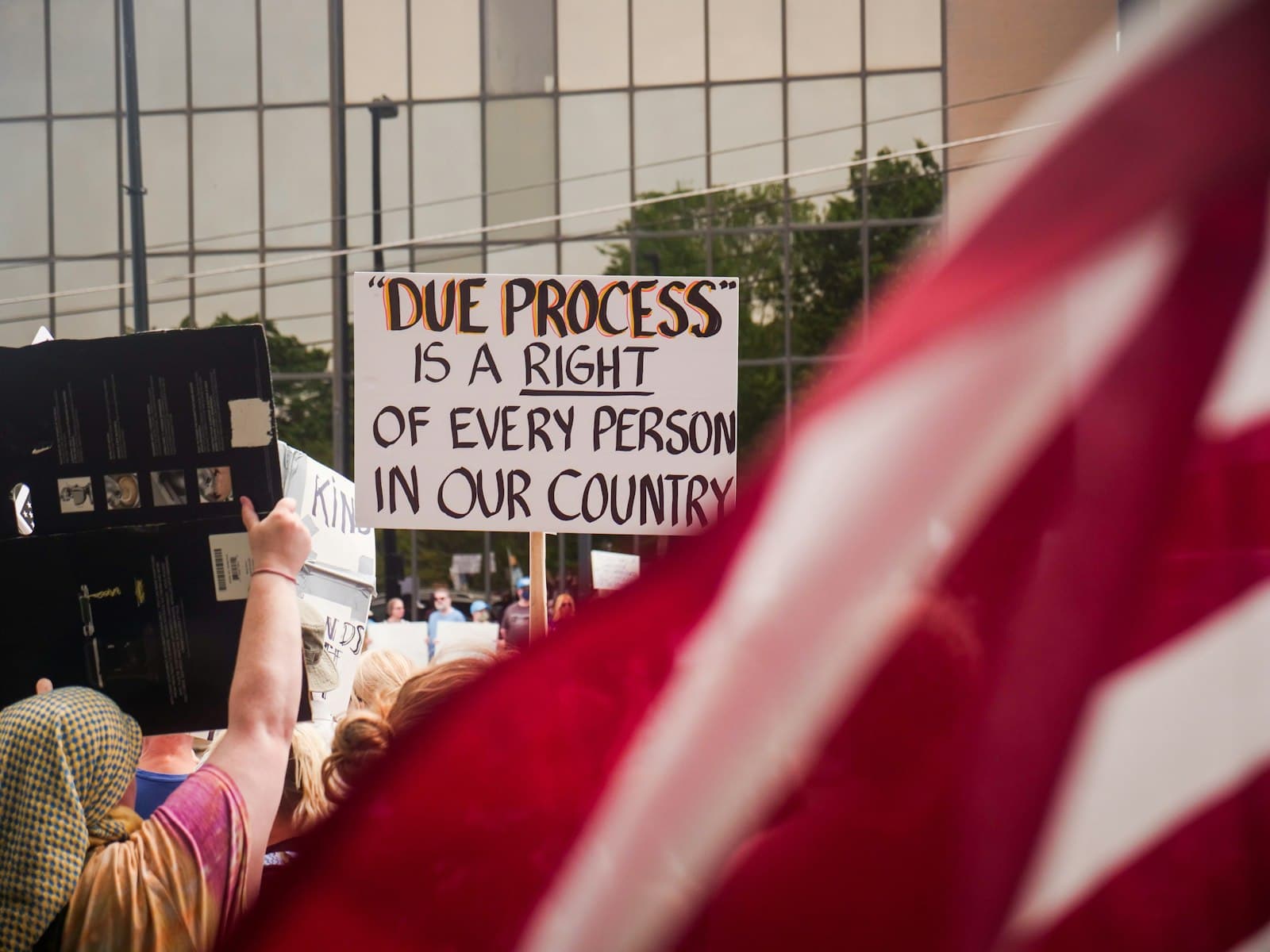
Officers must determine flight risk in advance and record the basis for it
The immigration statute sets out two conditions for arresting a person inside the United States without a warrant. There must be reason to believe the person is in violation of the immigration laws, and there must be a likelihood that the person will escape before a warrant can be obtained. The second condition has been in the statute for a long time, but how it works in practice has rarely been visible. An order issued by the Central District of California on September 2 examined exactly that. The order became public in mid-September, and the record behind it includes 871 arrest documents covering 113 arrested individuals.
The regulation makes a warrant the rule and warrantless arrest the exception
"A warrant of arrest shall be obtained except when the designated immigration officer has reason to believe that the person is likely to escape before a warrant can be obtained."
That is the text of the federal regulation governing immigration arrest procedure.
The structure is clear. Obtaining a warrant is the rule, and an arrest without one is the exception available only when escape is likely. Escape here does not mean failing to appear at a future hearing; it means becoming unlocatable by the time the officer returns with a warrant. The warrant in question is not a judicial warrant but an administrative arrest warrant issued within the agency. That is also why the determination has to come before the arrest.
The same regulation requires officers, as soon as it is practical and safe to do so, to identify themselves and state the fact of the arrest and the reason for it. This lawsuit includes a separate claim that this was not observed.
The court set out two standards in the order. The first is that the determination must account for the totality of the circumstances known before the arrest together with what the officer learned or could have learned between encountering the person and arresting them. The second is that the mere fact of being present in the United States without lawful status does not establish a likelihood of escape.
The second standard is the heart of the case. Lack of lawful status is a fact that goes to the first condition for arrest. Using it as the basis for the second condition collapses the two conditions into one and eliminates the reason the regulation made a warrant the rule.
A review of 871 documents found few traces of an actual determination
"Forty-one arrestees, more than one third of the total, had no document containing any flight-related language at all."
That figure comes from a sworn declaration the plaintiffs submitted after analyzing documents obtained from the government.
The review covered 871 documents for 113 arrested individuals and searched for specified terms. The absence of such language does not by itself make an arrest unlawful. Seventy-two individuals had some trace of a flight-risk notation, and for 48 of them the documents were substantially identical — three clauses strung together stating that the person fled from law enforcement, ignored officer commands, and was unlawfully present. The government had circulated template language, and many documents tracked it.
There were also cases where the record and the video did not match. One document stated that the person fled, while video showed him standing where he had been working at a car wash as an officer called out to him. Another stated the person was fleeing, while video showed him walking at a normal pace and texting. A third stated that the person said he had no government-issued identification showing an address, while the video contained no such question before the arrest.
The court also included testimony from the government agency's designated representative in its findings. Shown an investigative report containing no mention of flight risk and asked whether it reflected a concern about flight, the representative answered no. He nonetheless maintained that the arrest was proper because the officer had established probable cause of unlawful presence. In place of flight risk he cited three factors: country of birth, whether the person had documents, and whether the person admitted unlawful presence.
The written directive and what officers described in court did not match
"Officers and agents must document, clearly and concisely and contemporaneously, all factors supporting the determination that the subject was likely to escape before a warrant could be obtained."
That is from a directive Immigration and Customs Enforcement issued to all personnel on January 28.
The directive shifted the focus of the determination. Previously the analysis also considered whether the person would fail to appear for future proceedings; this directive instructed officers to consider whether the person could be located again at that place or at another clearly identifiable location by the time the officer returned with a warrant. It also required the factors to be recorded in the narrative field of the investigative record, and required an individualized determination for each person when multiple people were arrested at one location.
What field officers described in court, however, was different. Text messages among officers stated that agency policy was to arrest everyone who was not a citizen. Other exchanges described instructions to make contact, ask for identification, and arrest anyone who was not a citizen. One officer testified that he had been trained that confirming a person was a foreign national was enough to bring them in, and that he had received no other guidance.
The court treated this divergence as evidence of policy rather than individual error.
The court did not, however, enjoin the directive as a whole. Noting that the directive does not consist only of unlawful content, it enjoined only the portion that reads as establishing flight risk from the fact of unlawful status alone.
Know precisely what this order does not do
"Defendants are enjoined from the policy and practice of conducting civil immigration arrests in this District without the arresting officer first making an individualized determination that there is probable cause to believe the person is likely to escape before a warrant can be obtained."
That is the first paragraph of the order's operative section.
The order applies in seven counties: Los Angeles, Orange, Riverside, San Bernardino, Ventura, Santa Barbara and San Luis Obispo. San Diego and San Francisco, though in the same state, fall in different districts and are not covered. That said, the underlying statute and regulation apply identically nationwide, and courts in other jurisdictions have issued similar orders on the same question.
The plaintiffs are not arrested individuals but three organizations: a farm workers' union, a coalition of community worker centers and an immigrant rights organization. Whether arrested individuals will be certified as a class is to be decided in a separate order. So this order does not define a list of people entitled to relief; it enjoins the government's policy and practice itself.
Nor is it an order that undoes past arrests. It is a provisional measure governing future conduct until the case is decided. Arrests made with a warrant and criminal arrests are outside its scope. The government's request to stay the order for two weeks while it considered an appeal was denied. As of September 17 no appeal appears in the public record.
The court also did not grant everything the plaintiffs asked for. It declined to require periodic reporting. It declined to prohibit the use of the same template language, reasoning that similar arrests may produce similar sentences. The problem is not that the sentences are identical but whether a determination was made.
One more distinction matters. A different order in the same case last year addressed stopping people based on apparent race, spoken language, location, or type of work. The Supreme Court stayed that order in September 2025, and the order itself was later dissolved at the plaintiffs' request. A new motion on the same question is now pending before this court. The law governing street stops and the law governing warrantless arrests are in different postures right now.
Closing thoughts
There are three practical points to take from this order. First, a warrantless arrest requires both determinations, and the absence of lawful status supports only one of them. Second, the determination must be made before the arrest, and the officer is required to record it. The record is supposed to include the fact that the arrest was made without a warrant, the basis for the determination, the date and time and place of the arrest, and the time the record was made. If the person and their family write down the time and place of the arrest and what was said as best they recall, counsel can compare that against the government's records. Third, this order is a provisional measure covering seven counties and does not apply directly to cases elsewhere. Anyone arrested or who witnessed an arrest should organize the location and date, whether a warrant was shown, and whether officers identified themselves and stated the reason for the arrest, and discuss it with an attorney.
Frequently Asked Questions
Q. Now that this order exists, are warrantless immigration arrests no longer possible?
No. The order requires the two determinations the law already called for, and requires the reasons to be recorded. If there is reason to believe the person is in violation of the immigration laws and a determination that the person would become unlocatable before a warrant could be obtained, a warrantless arrest remains available. What is not sufficient for the second determination is the fact of unlawful status standing alone.
Q. Can someone arrested in New York or New Jersey rely on this order?
The order itself applies only in seven California counties. The underlying statute and regulation, however, apply identically nationwide, and courts in Washington, D.C. and Colorado have issued similar orders on the same question. How to raise it in a particular case should be discussed with an attorney.
Q. Does this order undo the case of someone already arrested?
It does not. It is a provisional measure governing future conduct until the case is decided, and it does not reverse past arrests. The circumstances of the arrest and the records the government created may nonetheless be material in an individual case, so it is worth organizing the date, the location and what was said.
Disclaimer: This column provides general information and is not legal advice for a particular case. Individual immigration matters should be discussed with a qualified immigration attorney.
Law Office of Jin D. Cho, P.C.
NEW YORK OFFICE (Flushing) 35-24 154th Street, Flushing, NY 11354
(T) 718-353-2699 (F) 718-353-8132
NEW JERSEY OFFICE 560 Sylvan Avenue, 3Fl., Englewood Cliffs, NJ 07632
(T) 201-449-0009