
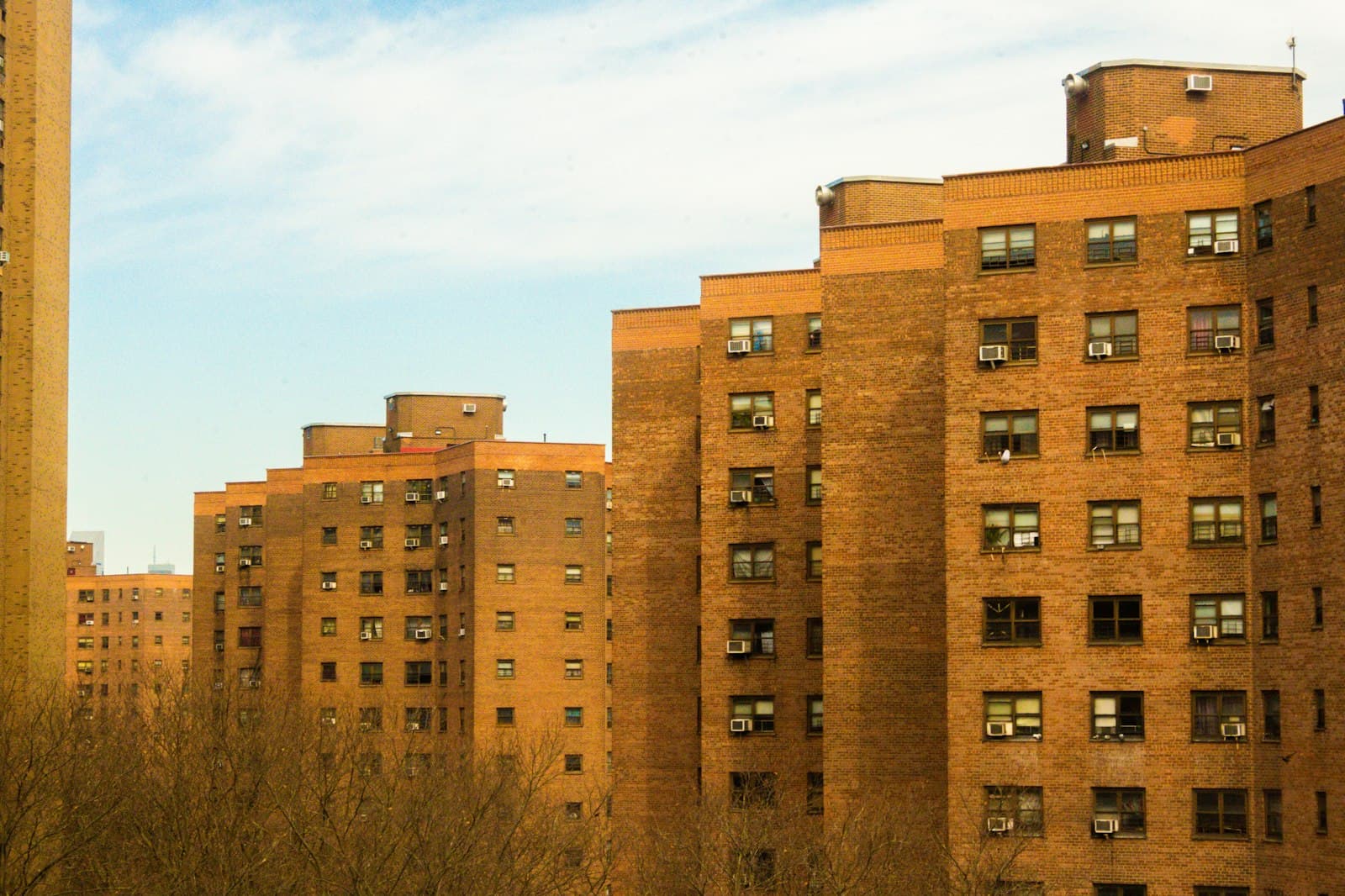
U.S. citizens must submit documents too, and households with an ineligible family member have until mid-March next year
The U.S. Department of Housing and Urban Development (HUD) published a final rule on November 12 in the Federal Register, the government's official record, and it takes effect on December 14. Households receiving public housing or Section 8 (rental assistance in which the government pays part of the rent) must, going forward, prove that every family member living with them has U.S. citizenship or an eligible immigration status. U.S. citizens, older adults, and children are no exception.
Who Submits What
"HUD's new rule requires every member of an assisted household, 'regardless of age,' to prove U.S. citizenship or eligible immigration status."
Until now there were three exceptions. Even if a family member had no documents, the rest of the family could keep receiving assistance for their share, leaving out only that person; U.S. citizens, as a rule, only had to sign a declaration; and older adults, such as permanent residents age 62 or older, only had to submit proof of age. The new rule changed all three.
Each family member submits a declaration and a consent form for status verification. The declaration is a document signed with the understanding that writing something false is punishable. For a child, the adult caring for the child in the household signs. U.S. citizens also submit a Social Security number, and noncitizens submit immigration documents such as a green card. They are submitted where the household has submitted income documents every year, that is, the housing authority or the building management office.
The housing authority or management office checks status through the Department of Homeland Security's status verification system. If a U.S. citizen cannot be confirmed there, the citizen has 30 days after receiving notice to submit an original or a copy certified by the issuing agency of a document such as a U.S. birth certificate, certificate of naturalization, or U.S. passport.
The statuses that qualify for assistance are a few set by law, such as permanent residents and people granted refugee status or asylum. Student and visitor visas are specifically excluded by law, and work visas, DACA (for people who came to the United States as children), and Temporary Protected Status (TPS) are not on the list either. A person who has only applied for a green card is not eligible on that basis alone.
A household where even one such person lives is called a "mixed-status family." Korean American households living with a son-in-law or daughter-in-law waiting for green card review, or an adult child whose visa has expired, may fall into this group. These households have received assistance in proportion to the number of eligible members. With a Section 8 voucher, for example, if only 2 of 4 family members were eligible, the rent subsidy the government pays was cut in half. Until now, this kind of assistance continued with no time limit. From now on, if an ineligible family member is still living in the household after the entire status verification process, including document submission, verification, and a hearing, is over, assistance for the whole household can end.
When the Documents Are Due
"The new rule requires tenants in mixed-status families who have not yet submitted documents to do so within 90 days of December 14."
By that count the deadline is March 14 next year, but that day is a Sunday, so it is safer to submit earlier. Households in which every member is a U.S. citizen or has an eligible status submit at the first income reexamination after December 14. That is the yearly submission of income documents, or a review held midyear because the household's income or makeup changed.
Housing authorities and management offices must send notices by January 11. Even if the notice arrives late, the deadline is counted from December 14, so it is better to gather documents in advance rather than wait. Once submitted, the documents do not need to be submitted again as long as the household keeps living there, but if a family member's status changes, such as approval of a green card, the household must notify the housing authority or management office right away and submit new documents.
If someone is in fact a U.S. citizen or has an eligible status but cannot get the documents in time, the deadline can be extended. One example is waiting for a replacement green card after losing it. In that case, submit that family member's declaration and consent form first, and state in writing that the documents are being diligently sought. The housing authority or management office must then extend the deadline. The extension can be up to 60 days in total for the whole family. It is not a way to buy time for someone who is not yet eligible, such as a family member waiting for a green card.
After Verification Is Complete
"Before ending assistance to a household with an ineligible member, the new rule allows the termination to be deferred in six-month increments, up to 18 months in total, to give the family time to move to other housing."
If status cannot be confirmed through verification, the housing authority or management office gives written notice. If the record is wrong, the household can ask the agency that holds the record, such as USCIS, to correct it. A household that receives notice that assistance will end can request a hearing within 30 days, a procedure in which the family can challenge the decision before the housing authority or management office and submit documents. Assistance does not end until the hearing is over, and in the meantime the household receives assistance for the eligible members' share.
If an ineligible family member remains in the end, assistance can be ended. What the household can receive at that point is a "deferral of termination," which gives the family time to move instead of ending assistance right away. A deferral is available only if the housing authority or management office approves it, and the first deferral is up to six months. If it is determined that no other suitable housing is available, it can be extended six months at a time, up to 18 months in total as a rule, including the first period. During that time, the household still receives assistance for the eligible members' share. Families that include refugees or asylum applicants are not subject to this time limit.
For example, suppose a mother and daughter who are U.S. citizens live in a Section 8 apartment with a son-in-law who has only applied for a green card and has no other eligible status. This household is a mixed-status family. The mother and daughter submit their declarations, consent forms, and Social Security numbers by March 14, and if verification cannot confirm them, they then submit a birth certificate or passport. The son-in-law cannot state that he is eligible, so he has no documents to submit. After the deadline passes, the household may receive notice that assistance will end, and after a hearing, move into the deferral process. If the son-in-law receives his green card in the meantime, the household can report it right away and have him counted as an eligible family member.
HUD estimated that there are about 20,000 such households nationwide, concentrated in California, Texas, and New York. It also projected that at most about 5% of households would contest the matter legally and that most would move out on their own, citing the immigration enforcement taking place at the same time as the reason.
If the ineligible family member moves out and lives separately, the remaining family's assistance is not reduced or ended because of that person. But there are things to consider before moving out. For a spouse waiting for a marriage-based green card, living apart does not by itself mean the marriage will not be recognized, but the couple may need to explain the circumstances in the marriage review. It is best to talk with an immigration attorney before deciding whether to move out. Also, most noncitizens, including permanent residents and green card applicants, must report a new address to USCIS within 10 days of moving.
On the other hand, if the housing authority or management office decides that the household knowingly allowed an ineligible person to keep living there, the whole household can lose assistance for 24 months or more. However, the law does not apply this penalty to a household that disclosed that family member to the housing authority or management office and received assistance with that person's share left out. That is why family members should not be hidden.
Immigration Law Questions to Consider Before Signing
"Immigration law provides that a noncitizen who falsely claimed to be a U.S. citizen to obtain government benefits is not to be granted a green card or admission."
Writing on the declaration that you are a U.S. citizen when you are not can trigger this provision. Then even someone who could later have received a green card through family sponsorship or employment may find that path blocked, and apart from very narrow exceptions, there is no way to undo it. Family members who are not sure of their own status should talk with an immigration attorney before signing.
The new notices will state that if the housing authority or management office determines that a family member is unlawfully present, it will report this to the Department of Homeland Security. However, according to a notice that federal agencies issued together in 2000, a failure to confirm status through verification is not by itself enough to treat someone as unlawfully present and report them. It must be supported by a decision of the immigration authorities or a court, such as a removal order. The new rule also provides that housing authorities and management offices may report in line with that notice. If a family member has received a removal order in the past, it is wise to check with an immigration attorney before submitting documents.
Meanwhile, in a November 10 press release, HUD said that its agreement with the Department of Homeland Security includes sharing information to identify people unlawfully present who are not eligible for housing assistance and to take "appropriate enforcement action." The rule says HUD passes information to the Department of Homeland Security to verify status, but also states that HUD is not responsible for how the Department of Homeland Security uses it afterward. It is hard to promise that the information submitted will have nothing to do with immigration enforcement.
Conclusion
Rather than waiting for the notice, it is better to gather every family member's documents in one place first. These include green cards, certificates of naturalization or U.S. passports, and children's birth certificates and Social Security numbers. Mixed-status families should submit documents well before March 14, and if documents are delayed, request an extension before the deadline. Even if you receive notice that assistance will end, there are hearings and deferrals of termination, so check these procedures before rushing to move out. If a family member's status is unclear, talk with an immigration attorney before signing the declaration or deciding to move.
Frequently Asked Questions
Q. Do we have to submit documents even if everyone in the family is a U.S. citizen or permanent resident?
Yes. Starting December 14, households receiving public housing or Section 8 must submit a declaration and a status verification consent form for every family member, regardless of age. U.S. citizens also submit a Social Security number, and permanent residents submit immigration documents such as a green card. These households submit at their first income reexamination after December 14.
Q. If we live with a family member waiting for a green card, what must we do, and by when?
If a family member who has only applied for a green card and has no other eligible status lives in the household, the household becomes a "mixed-status family." If it has not yet submitted documents, it must do so within 90 days of December 14, which works out to March 14 next year. If an ineligible family member remains after that, assistance can end, but the household can request a hearing within 30 days of receiving notice, and if the housing authority or management office allows it, the household can receive a deferral of termination, which gives time to move, of up to 18 months in total as a rule. If the green card comes through in the meantime, report it right away and submit new documents.
Q. Can I write on the declaration that I am a U.S. citizen?
Not if you are not a U.S. citizen. The declaration is signed on the understanding that a false statement is punishable, and immigration law provides that a noncitizen who falsely claimed to be a U.S. citizen to obtain government benefits is not to be granted a green card or admission. If this provision applies, even someone who could later have received a green card through family sponsorship or employment may find that path blocked, and apart from very narrow exceptions, there is no way to undo it. Family members who are not sure of their status should talk with an immigration attorney before signing.
Disclaimer: This column provides general information and is not legal advice for a particular case. Individual immigration matters should be discussed with a qualified immigration attorney.
Law Office of Jin D. Cho, P.C.
NEW YORK OFFICE (Flushing) 35-24 154th Street, Flushing, NY 11354
(T) 718-353-2699 (F) 718-353-8132
NEW JERSEY OFFICE 560 Sylvan Avenue, 3Fl., Englewood Cliffs, NJ 07632
(T) 201-449-0009
choattorneys.com | Marriage green card online: greencard4spouse.com