
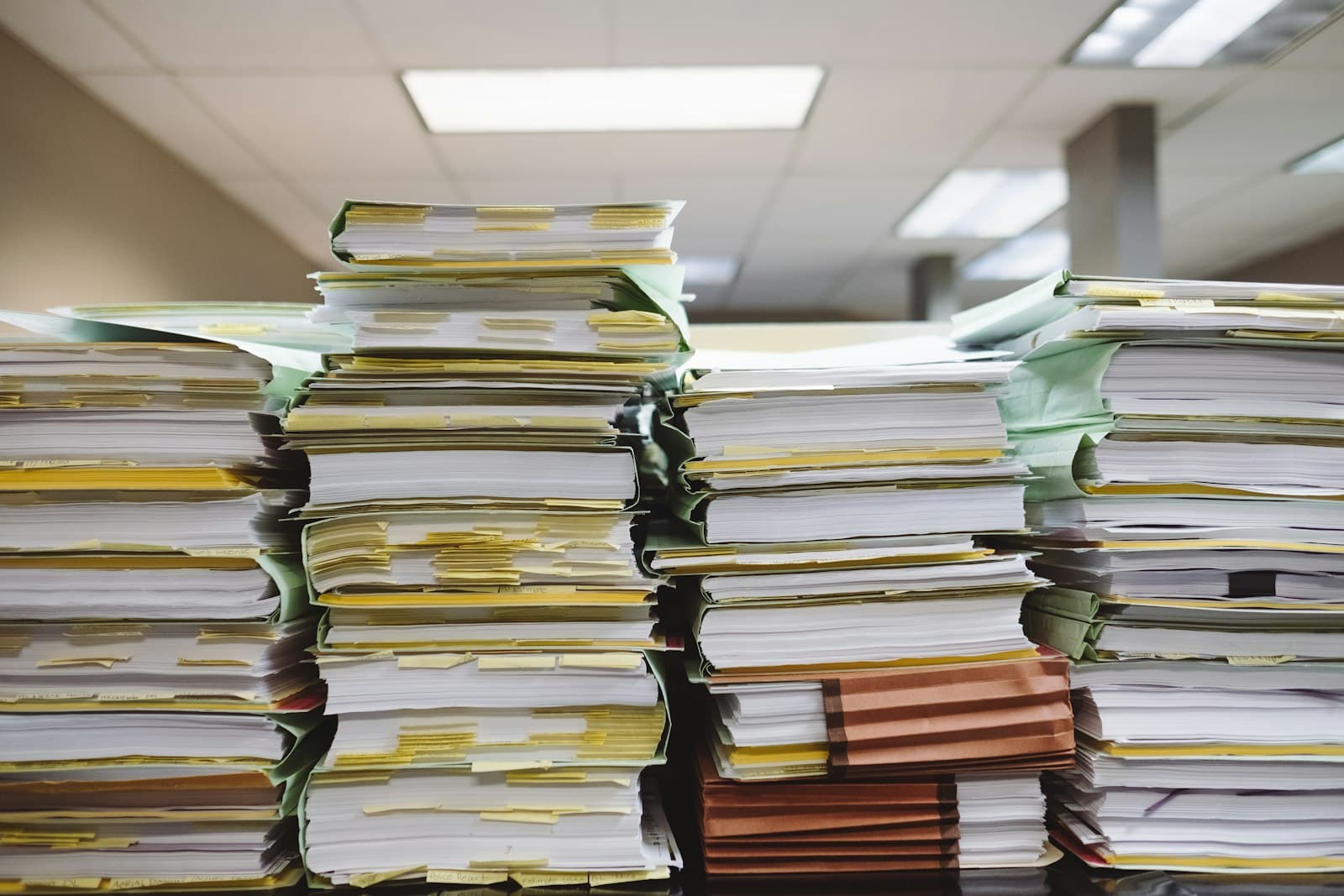
The Backlog Fell From 3.92 Million to 3.47 Million, and 192 New Judges Were Appointed This Year Alone
According to statistics from the Executive Office for Immigration Review (EOIR), the nationwide immigration court backlog peaked at 3,924,993 cases in fiscal year 2024, then began to decline, falling to 3,469,569 cases by the third quarter of fiscal year 2026. The pending caseload includes both removal cases and standalone asylum and withholding-of-removal cases. Over the same period, the composition of the judges hearing these cases has changed significantly, and the locations of courts and the pathways by which cases reach them have changed as well. A shrinking backlog is welcome news, but a closer look at the backlog, the judges, the courts, and the pathways shows that the burden on individuals preparing their cases has actually grown.
The Backlog Shrank Because New Filings Dropped Sharply
"According to EOIR statistics, through the third quarter of fiscal year 2026 there were 391,145 new filings and 660,343 total completions — meaning completions ran at roughly 1.7 times the rate of new filings."
The immigration court backlog started at 826,505 cases in fiscal year 2016 and grew to 1,391,386 in fiscal year 2019, 1,694,255 in fiscal year 2021, 2,105,316 in fiscal year 2022, and 2,811,599 in fiscal year 2023. This upward trend continued year after year up to 3,924,993 cases in fiscal year 2024. During this period, new filings substantially exceeded completions. In fiscal year 2021, there were 244,264 new filings against 115,965 completions; in fiscal year 2022, 707,529 new filings against 314,831 completions; and in fiscal year 2023, 1,206,102 new filings against 526,812 completions. Because far more cases came in each year than were completed, the backlog kept accumulating.
Starting in fiscal year 2025, however, the trend reversed. New filings fell from 1,783,905 in fiscal year 2024 to 562,375 in fiscal year 2025, and dropped sharply again to 391,145 through the third quarter of fiscal year 2026. Over the same period, completions actually rose. In fiscal year 2025, total completions of 798,808 outpaced the 562,375 new filings, and that pattern has continued through the third quarter of fiscal year 2026.
The backlog has not fallen because courts suddenly began hearing cases faster; rather, new filings have dropped sharply while the steady processing of the existing backlog has continued. The numbers alone make it look as though the courts' situation has improved, but the statistics do not explain why new filings have declined. For applicants, what matters is less the cause than the effect: cases already before the court are now reaching a conclusion faster than before.
The Composition of Judges Has Changed Dramatically
"The number of sitting immigration judges fell by 101, from 735 in fiscal year 2024 to 634 in fiscal year 2025, and then rose to 662 through fiscal year 2026's third quarter as 192 new judges were hired. These figures come from EOIR's judge hiring statistics."
The change in the number of judges is equally striking. The number of sitting judges rose from 634 in fiscal year 2022 to 734 in fiscal year 2023 and 735 in fiscal year 2024, then fell to 634 in fiscal year 2025. Because the statistics show only the headcount and do not explain the reason for the decline, this piece addresses only the fact that the number fell by 101.
Hiring to fill those seats accelerated sharply in fiscal year 2026. Through the third quarter, 192 new immigration judges had been appointed — the largest single-year hiring total in the past decade, well above the previous high of 133 in fiscal year 2023. For example, 77 immigration judges were appointed together in a single announcement on May 21, 2026, and 37 more were appointed on July 29. The statistics carry one footnote: judges who returned to work while collecting a pension are counted in the hiring figures, but temporary judges are excluded, as are sitting judges who moved into administrative positions.
Even so, the number of sitting judges, at 662, has still not returned to the fiscal year 2024 peak of 735. In addition, as of June 30, 2026, 53 temporary immigration judges were separately hearing cases, bringing the combined total to 715. Temporary immigration judges are tallied in a separate category from sitting immigration judges and are not included in the sitting-judge statistics. As a result, a substantial share of the bench has turned over to newly appointed judges within the past two years. When the judge assigned to a case has arrived recently, it becomes harder to draw on that court's established track record. That means it has become correspondingly harder to predict the outcome in advance, even when submitting the same documents and the same set of facts.
The Courts Themselves Are Being Reorganized
"On May 1, EOIR announced that the San Francisco Immigration Court would permanently close at the close of business on September 4, 2026, with its cases transferring to the Concord Immigration Court."
The locations of courts are changing as well. On April 10, 2026, an announcement was made that hearings at the Montgomery Street location of the San Francisco Immigration Court would stop first, and on May 1 the permanent closure of the court itself was announced. That closure date has not yet arrived, however — the court will actually close at the close of business on September 4, 2026, after which the Sansome Street location will remain as a hearing site under the jurisdiction of the Concord Immigration Court. Cases will proceed at the Concord Immigration Court or be heard remotely.
In New York State, the Batavia Immigration Court near Buffalo closed at the close of business on July 24, because DHS was no longer able to provide court space. All pending cases transferred to the Buffalo Immigration Court and are heard by video, and filings have had to be submitted to the Buffalo Immigration Court since July 27. Courts are not only closing, however — the opening of the Baton Rouge Immigration Court was announced on September 2, 2025.
This reorganization of courts translates into practical burdens for individual applicants. When jurisdiction changes, a case may be transferred to a different court or the hearing location may change, and the travel distance and time to the newly designated court may increase. EOIR has stated that it will send a new hearing notice to any party whose case is reassigned. This is why it is important to periodically recheck the court location and assigned judge listed on the notice, even after a case has already been filed.
During a jurisdictional transfer, it can also take time for documents and records to move to the new court. Applicants proceeding without an attorney, in particular, must be especially careful not to miss a change-of-court notice and fail to appear for a hearing as a result. It is also important to keep in mind that failing to appear can result in a removal order being entered in absentia.
More Pathways Now Send Cases Straight to Court
"A rule published in the Federal Register (FR 2026-15190) allows asylum applications that appear not to meet eligibility requirements to be referred to an immigration judge based on a paper review alone, without an interview."
In the summer of 2026, two new pathways opened that send cases which had previously been resolved at the USCIS level straight into the court system. The first is a rule that took effect immediately upon publication in the Federal Register on July 28, 2026. It is an interim-final-rule format that becomes effective on the day of publication without first going through a formal notice-and-comment period, and remains open to being revised based on comments received after taking effect. Asylum applications that missed the filing deadline, present a bar to eligibility, are viewed as unfavorable as a matter of discretion, or appear not to meet the substantive requirements can be referred to an immigration judge based on the written record alone, without a separate interview. The comment period remains open until September 28, 2026, but the rule is already in effect.
The second is a USCIS policy issued on August 5, 2026. It provides that if evidence required at initial filing is missing from an application, USCIS may deny it outright without issuing a Request for Evidence (RFE) or a Notice of Intent to Deny (NOID), and this policy applies as well to applications already filed and pending review as of the effective date.
What these two measures have in common is that they reduce the opportunity to supplement documents at the USCIS stage and send the case straight into the court system. In the past, a USCIS officer would flag missing documents through a Request for Evidence and give the applicant time to fill the gap; now that step can be bypassed entirely, and a case can be denied or pushed directly into court. With the courts now completing cases at roughly 1.7 times the rate at which new cases arrive, a case that reaches court is likely to reach a conclusion faster than before. A case that once could have been corrected with more time at the USCIS stage can now become a case litigated in court from the outset. The burden of filing a complete application the first time, at the initial filing stage, has grown far heavier than before.
Closing Thoughts
It is a clear fact that the immigration court backlog has fallen. But faster processing also means that outcomes are reached that much faster, and the opportunity to fix documents before appearing in court has actually shrunk. There are three practical things to keep in mind.
First, at the application stage, all evidence required for initial filing must be assembled in full. Filing quickly on the assumption that a Request for Evidence will follow later is no longer a safe approach. It is advisable to work with an attorney to check the initial filing requirements item by item and confirm that nothing is missing.
Second, once a case is in the court system, all statements and evidence should be ready before the first hearing date. Given the faster pace of processing, it is difficult to count on having the luxury of supplementing the record gradually across a second or third hearing date. If the assigned judge was recently appointed, counsel should check in advance how that court has recently been conducting hearings. In courts where the judge has recently changed, it is safer to prepare thorough written materials rather than relying solely on oral testimony.
Third, the court location listed on a notice should be periodically rechecked even after a case has been filed, because hearing locations can change while court jurisdictions are being reorganized.
Statistics showing a shrinking backlog reflect only the court system's own circumstances. What actually reduces the burden on any individual is how thoroughly the three points above have been addressed in advance.
Disclaimer: This column is for general information purposes only and is not legal advice for your specific case. You should always consult with an attorney who specializes in immigration law for your individual case.
Law Offices of Jin D. Cho
NEW YORK OFFICE (Flushing) 35-24 154th Street, Flushing, NY 11354
(T) 718-353-2699 (F) 718-353-8132
NEW JERSEY OFFICE 560 Sylvan Avenue, 3Fl., Englewood Cliffs, NJ 07632
(T) 201-449-0009