
USCIS is adjudicating under the prior regulations. Dates written down from school notices need to be checked again.
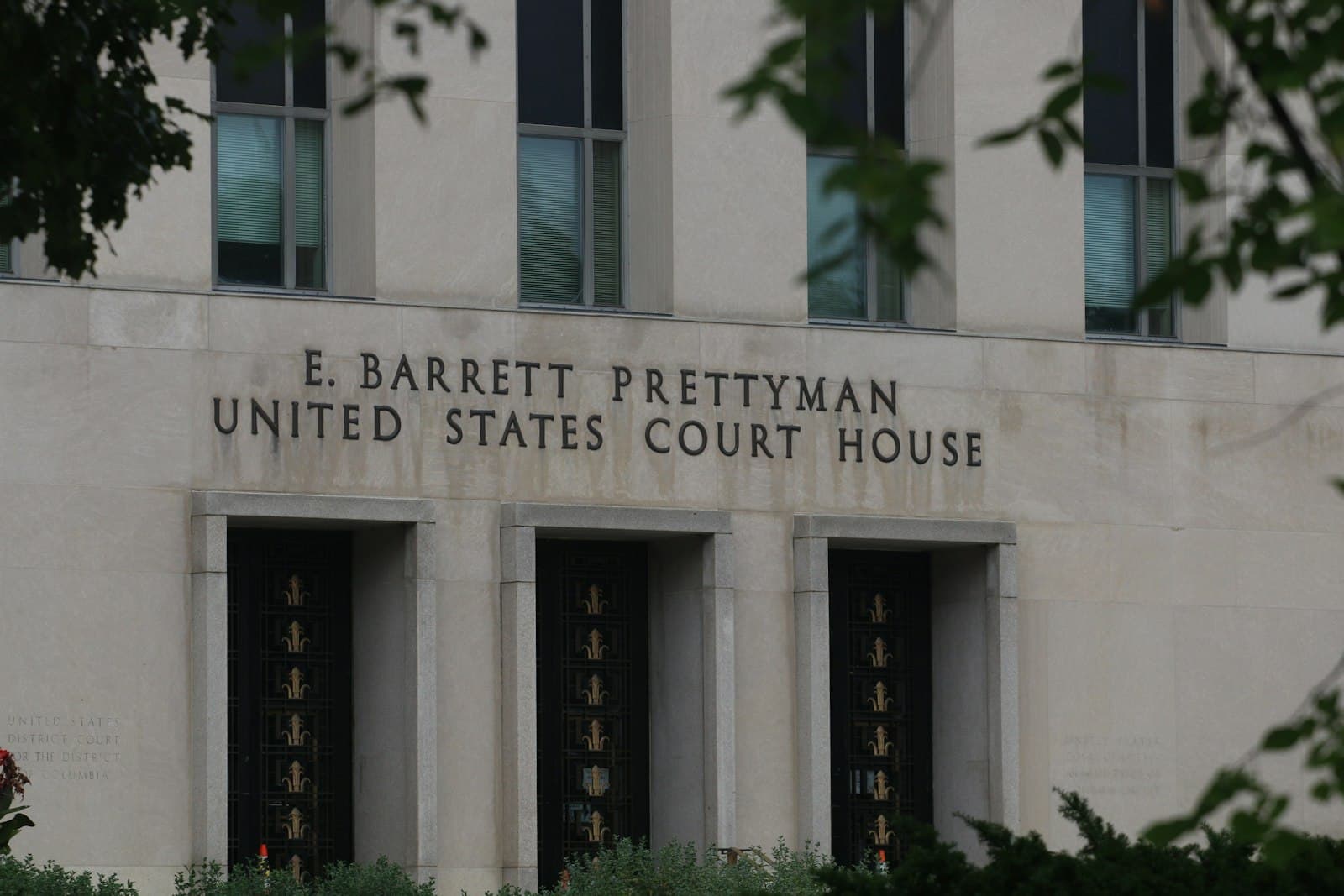
The rule that would give F student status a fixed end date did not take effect on September 15. On the afternoon of September 14, the day before, a federal court in Boston postponed the effective date until the case is decided or the court orders otherwise. The next day USCIS posted the order on its form instruction pages and stated that it would adjudicate under the regulations in place before the rule. For two months schools and the student exchange program office had been advising students on dates and preparations that assumed the rule would take effect, and much of that guidance no longer fits after the court's ruling. Here is what students and schools should check, in order.
What the court postponed is the effective date; the rule itself remains
"The effective date of the final rule is postponed until further order of this court or the conclusion of the merits. Defendants may take no further action to implement the final rule until then."
That is the operative language of the two-page order issued on September 14, in plain terms.
The plaintiffs were an association of university presidents, an association of international student advisers, a faculty union and a journalists' union, among others, and they asked for two things: that the rule be vacated outright, or, failing that, that its effective date be postponed until the case is decided. The court granted only the second. It declined to vacate the rule for now but left the door open for the plaintiffs to renew that request. So the rule remains published in the Federal Register, with no effective date.
The order reaches the entire rule. The four-year cap on J exchange visitor status and the 240-day extension provision for foreign media representatives in I status are postponed along with it.
The effect is nationwide rather than limited to the plaintiff schools. The judge noted that the plaintiff organizations represent roughly 600 institutions while the United States has more than 5,000 institutions of higher education, and that applying different rules school by school would make transfer students impossible to process.
The court gave four reasons for the postponement. The Department of Homeland Security did not calculate the costs of a decline in international student enrollment; it did not consider alternatives such as fixing the student tracking system; it did not respond to significant comments among roughly 22,000 submitted; and it did not explain how a four-year end date connects to national security or fraud prevention. These are procedural defects the government can cure and return with. USCIS stated in its own notice that it strongly disagrees with the order and will implement the rule if the order is lifted. The next date on the calendar is a status conference on October 2, but the postponement does not end that day, and as of this writing on September 17 no appeal appears in the public docket. If the government appeals, an appellate court could stay this order.
The dates written down ahead of the effective date have no use for now
"Until then, USCIS will continue to adjudicate under the prior regulations."
That is the sentence USCIS posted on September 15 to the instruction pages for the employment authorization application and the extension of stay application.
School notices and program office guidance asked students to write down three dates on the assumption that the rule would take effect: the maximum stay for students already here, November 14, 2030 (October 15 for exchange visitors); March 18, 2027, the date through which post-completion practical training could be requested without a separate extension application; and the 180-day mark before the end date along with the final 30 days. The first two are provisions inside the rule. The last two were program office guidance premised on the rule taking effect. Since the rule did not take effect, none of these dates carries any force right now.
Student status works as it did before. A student who continues a full course of study through the program end date listed on the Form I-20 maintains status, and the grace period after completing the program remains 60 days. Post-completion practical training is requested with the employment authorization application alone; no extension of stay application is filed. The provisions that would have restricted changing majors in the first year or transferring schools at the graduate level also did not take effect.
That said, this order does not restore anything. A student who has passed the grace period after completing a program, or whose record has already been terminated in the tracking system, is in the same position whether the rule took effect or not. Anyone in that situation should still seek advice now.
Travel is the same. Program office guidance said that a student returning from abroad after the rule took effect could receive an arrival record bearing a fixed end date. Since the rule did not take effect, arrival records should be issued without an end date. What actually happens at the airport, however, has not been verified. A student who traveled abroad this term should open the arrival record at the Customs and Border Protection site (cbp.gov/i94) after returning and, if a date appears, notify the school's designated school official immediately.
The form editions are now the exact opposite
"In accordance with the September 14 order, USCIS continues to accept the 08/28/24 edition of Form I-539 and the 08/21/25 edition of Form I-765, and is not accepting the 09/15/26 editions of either form."
That is from the USCIS instruction pages.
In August, USCIS announced that starting September 15 it would accept only the new editions and would reject the prior ones. The court order reversed that. Right now only the prior editions are accepted and the new editions are not. An application filed on or after September 15 using a new edition will not be accepted and will be returned, and a returned filing does not keep its filing date, so it has to be refiled on the prior edition. If the filing was a renewal submitted ahead of an expiring employment authorization document, a gap may result, so watch for the rejection notice.
Conversely, an application filed before September 15 on the prior edition will not be rejected over the edition, and anyone who already has a receipt notice will have the case adjudicated as usual.
One more form changes editions the same week, which makes this easy to confuse. The adjustment of status application, Form I-485, accepts only the new edition starting September 18, and both prior editions are rejected. That comes from the public charge rule and has nothing to do with this order. A lawsuit has been filed against that rule, but as of this writing no court decision has stopped it. Filing the adjustment application on a prior edition because the student rule was postponed will get that filing rejected.
As of September 17 the Student and Exchange Visitor Program guidance page still shows content last revised on September 10, written as though the rule were taking effect, with no mention of the court order. Whether the student tracking system update announced for the night of September 14 included the rule's functions has also not been confirmed. For now the USCIS form pages and school notices are the reference.
The practical training guidance stands independently of this order
"The program office has observed an increase in approvals of curricular practical training that is not an integral part of an established curriculum. Accordingly, oversight of these approvals is being strengthened to ensure regulatory compliance."
That is the opening paragraph of guidance the program office sent to designated school officials on August 12.
That guidance and the follow-up questions and answers issued on August 24 were separate from the four-year rule. They set out how the current regulations are interpreted, so they continue to apply regardless of the court postponing the rule's effective date. The substance is that curricular practical training during a program of study must be an integral part of the school's established curriculum and directly related to the major, and that an authorization whose purpose is the employment itself is not permitted. The program office may ask a school for supporting documentation. Schools that do not comply may lose their certification to enroll international students. Post-completion practical training is not the subject of this strengthened oversight.
A graduate student who has been authorized for curricular practical training from the first term and is working should confirm with the school, separately from this court news, that the training is required in that program. The standard offered in the follow-up questions and answers is whether every domestic student in the same program also performs it. If a school loses certification, the school's other students are affected as well.
Closing thoughts
Three things to do now. First, erase the rule-based dates written on the calendar from school notices, and keep only the program end date on the Form I-20 and the 60 days that follow it. Second, if an extension of stay application (I-539) or an employment authorization application (I-765) was filed on a new edition on or after September 15, do not wait for the rejection notice; prepare to refile on the prior edition. Third, if there was travel abroad this term, check the date on the arrival record, and if curricular practical training is underway, ask the school whether that training is required in the curriculum. This order is a temporary measure, and the government has said it will implement the rule if the order is lifted. If the rule comes back, USCIS will post notice again and the applicable dates and transition provisions will have to be checked at that point, so keep the school notices received so far rather than discarding them.
Frequently Asked Questions
Q. What happens if I filed a new-edition employment authorization or extension of stay application after September 15?
Following the September 14 court order, USCIS is not accepting the 09/15/26 editions and accepts only the prior editions. A filing on a new edition will be rejected, and a rejection erases the filing date. Rather than waiting for the rejection notice, it is safer to prepare to refile on the prior edition.
Q. Is the guidance still valid that requesting post-completion practical training by March 18, 2027 avoids a separate extension application?
That date is a provision inside the rule whose effective date was postponed, so it has no force now. With the rule not in effect, the prior practice applies: file the employment authorization application alone and do not file an extension of stay application. If the rule is revived, that date may become relevant again.
Q. The court blocked it, so is the four-year student rule gone?
No. The court did not vacate the rule; it postponed the effective date until the case is decided. USCIS has said it will implement the rule if the order is lifted, and the next date is a status conference on October 2. Keep following school notices for developments in the litigation.
Disclaimer: This column provides general information and is not legal advice for a particular case. Individual immigration matters should be discussed with a qualified immigration attorney.
Law Office of Jin D. Cho, P.C.
NEW YORK OFFICE (Flushing) 35-24 154th Street, Flushing, NY 11354
(T) 718-353-2699 (F) 718-353-8132
NEW JERSEY OFFICE 560 Sylvan Avenue, 3Fl., Englewood Cliffs, NJ 07632
(T) 201-449-0009