
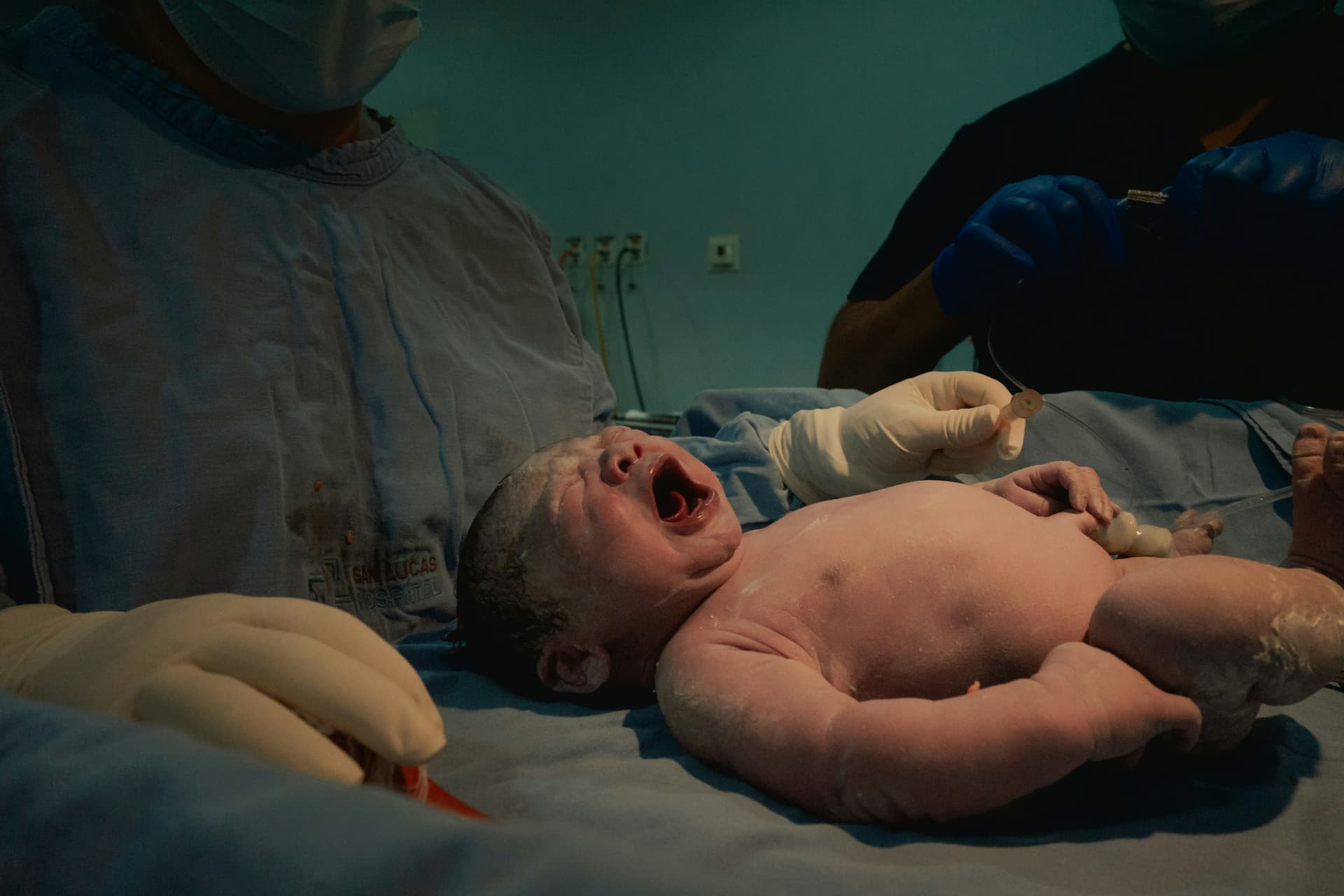
Trump v. Barbara (Case No. 25-365) — Interpretation of the Citizenship Clause of the 14th Amendment is the core issue
On January 20, 2025, President Trump signed Executive Order 14160 on his first day in office. This order stated that children born in U.S. territory would not be granted birthright citizenship if neither parent is a U.S. citizen or lawful permanent resident, meaning if their parents are undocumented immigrants or hold temporary statuses such as student or work visas. The Supreme Court is preparing to rule on whether this order is constitutional. As of May 22, 2026, no ruling has been issued, and it is generally anticipated that a decision will be made between the end of June and the summer. This case is drawing attention as the most direct legal challenge to the principle of birthright citizenship since the ratification of the 14th Amendment in 1868.
What does the executive order contain, and why did it become controversial?
“U.S. government departments and agencies shall not issue or accept documents recognizing U.S. citizenship for individuals whom the Executive Branch determines are not granted citizenship at birth under the Fourteenth Amendment.” — Executive Order 14160, Text (Federal Register, Vol. 90, Jan. 29, 2025)
Executive Order 14160 states that 30 days after its effective date, children born to an mother who is unlawfully present in the United States or holds temporary lawful status, and a father who is neither a citizen nor a lawful permanent resident, will not be granted U.S. citizenship. Temporary lawful status here includes all non-immigrant visa holders such as student visas (F-1), work visas (H-1B), intra-company transfer visas (L-1, E category), and tourist visas. The practical effect is that federal government agencies will not issue or recognize documents related to citizenship, such as birth certificates, passports, or Social Security numbers.
However, this order was met with an immediate halt in federal courts nationwide. Several state governments and civil groups, including Maryland, Massachusetts, and Washington, filed lawsuits, and in every case challenging the order, lower federal courts issued injunctions without exception. The executive order has never actually been enforced, not even for a single day since its signing, and children born in the United States are currently granted birthright citizenship under existing law.
◆ From Lower Courts to the Supreme Court — The Progression of a Two-Stage Lawsuit
“The federal courts cannot issue universal injunctions—orders that prevent a specific action from applying to anyone nationwide beyond the litigants—beyond the scope necessary to provide complete relief to the plaintiff parties. — Supreme Court, Trump v. CASA, Inc. (June 27, 2025, 24A884), Opinion of the Court by Justice Amy Coney Barrett
Prior to the currently pending Supreme Court case of Trump v. Barbara (No. 23-365), the Supreme Court made a significant procedural ruling in the earlier case of Trump v. CASA, Inc. (No. 24A884) on June 27, 2025. In that decision, the Court held 6-3 that broad universal injunctions issued by lower courts are not permissible in principle. This was a procedural determination limiting the scope of an injunction to the parties in the lawsuit, rather than a decision on the merits of the underlying executive order itself.
The constitutionality of executive orders is being directly addressed in a separate case, Trump v. Barbara (25-365). On April 1, 2026, the Supreme Court held oral arguments in this case – a procedure where counsel for both sides present their arguments directly to the justices. Many media outlets reported this as the first time a sitting president had personally appeared for oral arguments before the Supreme Court. The arguments lasted approximately two hours, and as of May 22, 2026, the Supreme Court has not yet issued a ruling.
◆ Key Legal Issue—The Meaning of “Subject to Jurisdiction”
“The citizenship clause of the Fourteenth Amendment was not intended to impose any new limits on citizenship, but was purely affirmative and declaratory in its nature, and designed to remove doubts and quiet controversies.”
The core of this case lies in the wording of the Citizenship Clause of the Fourteenth Amendment. This clause stipulates that “All persons born or naturalized in the United States and subject to its jurisdiction are citizens of the United States,” and Section 301 of the federal Immigration and Nationality Act (8 U.S.C. §1401(a)) also codifies this principle into statutory law.
The Trump administration argues that this “subject to the jurisdiction thereof” phrase requires legal status allowing permanent residence in the United States, meaning domicile (the place of permanent residence or the intention to reside legally). The logic is that if the parents are in a temporary status, they lack domicile, and therefore their children are not eligible for birthright citizenship under the Constitution.
On the other hand, the opposing side and a number of constitutional scholars refute this with the 1898 Supreme Court ruling in *United States v. Wong Kim Ark* (169 U.S. 649). In this case, the Supreme Court granted citizenship to Wong Kim Ark, who was born to parents of Chinese immigrants who had been permanent residents in San Francisco for decades. While the current administration interprets this ruling as being limited to the children of permanent resident parents, the opposing side argues that the ruling's intent applies to all persons born within U.S. territory, with the sole exceptions of children of diplomats or children of enemy forces occupying the territory. Congress codified this principle in the Immigration and Nationality Act of 1952.
During oral arguments, Justice Kavanaugh questioned why Congress maintained the birthright citizenship provision in the Immigration and Nationality Act even after the Wong Kim Ark ruling, and Justice Barrett pointed out the practical impossibility of immediately verifying parents' intent to immigrate at the time of birth. SCOTUSblog analyzed that the reactions during oral arguments indicated a trend unfavorable to the executive order, leaning towards a 6-3 or 7-2 split, but any prediction remains uncertain before the ruling.
◆ Practical Implications for Korean Households
“About 91% of babies born in the United States in 2023 were born to mothers who were undocumented or had temporary legal status.” — Pew Research Center, March 2026
The Pew Research Center estimated that in March 2026, approximately 260,000 children born in 2023 would not have been granted birthright citizenship if the executive order had already been in effect. This figure includes about 15,000 born to mothers with temporary legal status, such as those on student or work visas. However, the order would not be retroactive, so officials expect no change in the status of children already born and granted citizenship.
This incident is directly relevant to Korean families giving birth in the United States. This includes cases where individuals are staying in the U.S. on temporary visas such as student visas (F-1), or for those dispatched by their companies (L-1 visa, E-series visas), and then have a child. If the executive order takes effect, children born in the future may not automatically receive birthright citizenship and could be in a situation where they must maintain their U.S. residency status solely through their parents' visa status. This case is significant because a long-standing principle regarding the constitutional basis of birthright citizenship is being re-examined by the highest court, making it important for the Korean community to pay attention to the direction of the ruling and its ripple effects.
◆ Practical matters to attend to now
A verdict has not yet been reached. Regardless of the outcome of this case, there are practical matters that families in the US who are raising children or are expecting a child should take care of in advance.
First, keep the original birth certificate of your child and make several notarized copies to store in different places. This document is the primary official document proving citizenship status. In addition to the hospital-issued birth certificate, it is also recommended to separately obtain and keep an official birth certificate issued by the state government.
Second, if you have a U.S. passport, check its expiration date and renew it before it expires. Your passport is an official identification document containing the legal basis for your citizenship acquisition, and it will serve as the most reliable proof of status for future administrative procedures.
Third, organize your parents' immigration documents including visas, I-94 records, and visa extension approvals along with your child's documents. Documents showing your parents' legal immigration status at the time of your child's birth can serve as an important reference for future administrative procedures.
Once the Supreme Court ruling is announced, we will promptly analyze its content and provide further guidance.
Disclaimer: This column is for general information purposes only and is not legal advice for your specific case. You should always consult with an attorney who specializes in immigration law for your individual case.
Law Offices of Jin D. Cho
NEW YORK OFFICE (Flushing) 35-24 154th Street, Flushing, NY 11354
(t) 718-353-2699 (f) 718-353-8132
NEW JERSEY OFFICE 560 Sylvan Avenue, 3Fl., Englewood Cliffs, NJ 07632
(t) 201-449-0009