
The Dilemma of U.S. Agricultural Immigrant Workers - H-2A Wage Cuts and Massive Expanded Deportations
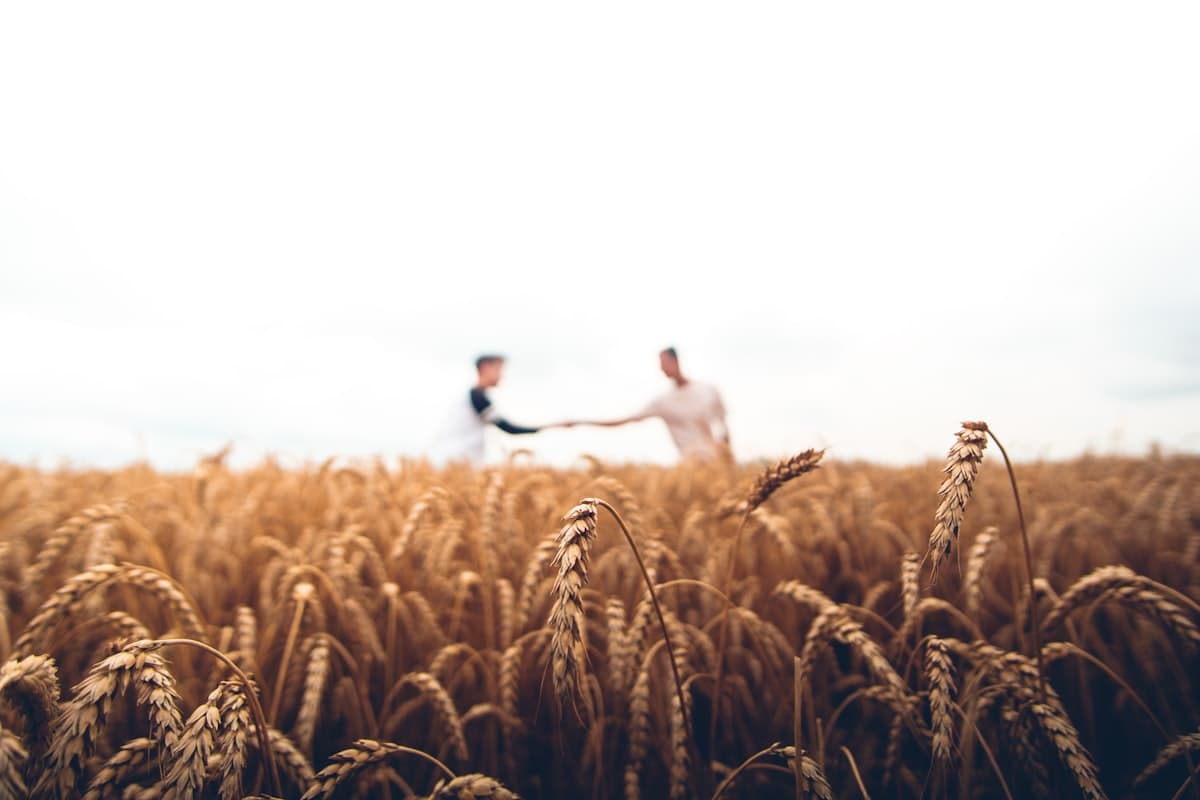
Anyone who has ever worked a field on a farm knows what it's like to wake up at four in the morning, bend over, and walk down endless furrows picking lettuce and strawberries. And they know who does that work. Peter Belluomini, a citrus farmer in Contra Costa County, California, reported that since immigration enforcement has increased, his usual crew of thirty harvest workers has dwindled to five. The rest, he explained, are “hiding at home.” Belluomini, who is also the former president of the Contra Costa County Farm Bureau, has been farming for decades, but he said he has never seen a situation where workers were too afraid to come to the fields.
According to the U.S. Department of Agriculture's (USDA) Economic Research Service (ERS), approximately 73 percent of the agricultural workforce is foreign-born. The Department of Labor's National Agricultural Workers Survey (NAWS, 2020-22) estimated that 42 percent of crop production workers are undocumented immigrants. Mexicans constitute 88 percent of undocumented farm laborers. The California Farm Bureau estimates that roughly half of California's agricultural workforce is undocumented. These are not just numbers; they are stories of people, and they are stories of our dinner tables. American farms are currently caught at the crossroads of two conflicting policies. On one hand, there's the acknowledgment that agriculture cannot survive without immigrant labor, while on the other hand, policies aim to reduce their wages and expand deportations. This contradiction is playing out simultaneously across American farmlands in the spring of 2026.
◆ Confession from the Courtroom
“A land without people to work it is an empty land, even if it has a master. — Californian farmer's proverb”
March 18, 2026, U.S. District Court, Fresno, California. A hearing was held in the lawsuit filed by the United Farm Workers (UFW) against the Trump administration's H-2A wage reduction rule. Outside the courthouse, hundreds of farmworkers rallied, and the flags of the UFW, carrying on the legacy of Cesar Chavez, fluttered in the Fresno spring breeze. Inside the courtroom, an unexpected statement emerged. The administration's lawyer admitted, “There aren't enough Americans to take these jobs.” The side that came to defend a policy to reduce immigrant labor ended up on the court record stating that agriculture cannot function without those workers.
The rule in question is an amendment to the Adverse Effect Wage Rate (AEWR) promulgated by the Department of Labor (DOL). The H-2A agricultural visa program allows for the temporary employment of foreign workers when there is a shortage of domestic workers, and the AEWR is the minimum wage standard that employers must pay. Originally, it was set based on the average agricultural wage in the local area, serving as a safeguard to prevent the influx of H-2A workers from driving down the wages of American workers. The new rule fundamentally changed this structure. It divided H-2A workers into two tiers, classifying 92 percent of them as ‘unskilled’ and lowering their wage standard to the 17th percentile of wages across the entire United States. This means that more than nine out of ten farmworkers will now be treated at a level equivalent to the bottom 17 percent in the U.S.
In concrete terms, the minimum hourly wage for H-2A workers is set to plummet from a range of $15-$20 in 2025 to $8-$17 in 2026. The Economic Policy Institute (EPI) analyzed that the average minimum wage dropped from $17.43 to $13.70. Federal Judge Kirk Sherriff noted that setting wages “significantly lower than those paid to American workers performing similar tasks” undermines the market itself. The UFW seeks a preliminary injunction to halt the rule, and a ruling is expected soon. What has already become clear in court is the contradiction of a policy that acknowledges a need but seeks to pay less for it.
$4.4 Billion Wage Cut, and Empty Fields
“The fight for the least of all our brothers is the fight for everyone. — Cesar Chavez”
According to EPI's estimates, the AEWR revisions will result in over 350,000 H-2A workers losing more than $2 billion in annual wages. This represents a wage cut of 26 to 32 percent of their total earnings. The impact is not limited to H-2A visa holders. As H-2A wages fall, domestic workers harvesting the same crops in the same regions will also face downward pressure on their wages. This is because employers will have less incentive to offer higher wages to domestic workers if they can hire H-2A workers for lower pay. The estimated annual wage loss for domestic farmworkers is approximately $3 billion, or 9 percent of their total earnings. Combined, the annual wage loss for all farmworkers will range from $4.4 billion to $5.4 billion, or 10 to 12 percent of their total earnings. Based on Department of Labor data, estimates project a $24 billion wage reduction over the next decade. Meanwhile, Congress is considering a budget amendment that would significantly expand H-2A visas, which EPI warns, when combined with the new wage rule, will further accelerate wage declines for farmworkers.
As threats of deportation mount amid wage cuts, the fields are emptying. In the Central Valley, farmworker attendance has plummeted, with NBC Bay Area reporting that workers are too afraid of crackdowns to show up, leaving farmers unable to find replacements and watching crops rot in the fields. Wisconsin Public Radio (WPR) reports that “the prospect of increased deportations is already a major concern for farmers already grappling with labor shortages.” ABC News also reports that increased immigration enforcement has put migrant farmworkers across the country on “high alert.” Some California farmers have already decided to reduce their planted acreage this year.
The situation is no different in Long Island, New York. According to a RiverheadLocal report dated March 25, 2026, Bill Zalakar, executive director of the Long Island Farm Bureau, predicted that labor would be “tight” this spring. Farms in the East End are starting the spring season with an anxious atmosphere, and only a few Long Island farm owners are utilizing the H-2A program. The complicated process, which requires planning a year in advance and hiring a lawyer, along with increasing fees, creates a high barrier for small farms. “The agricultural community is heavily reliant on immigrant labor, and very few Americans are willing to do this labor-intensive work,” Zalakar stated clearly.
A slogan of ‘100% American workforce'
“Politicians promise harvests without sowing seeds. — Mexican proverb”
In a July 2025 CNN interview, Secretary of Agriculture Brooke Rollins declared, “There will be no amnesty in any form, and large-scale deportations will continue,” setting the ultimate goal of a “100 percent American workforce.” The logic was that the 34 million able-bodied adults enrolled in Medicaid could serve as an alternative for the agricultural workforce. Simultaneously, he stated, “deportations must be implemented strategically and deliberately to ensure that we do not undermine our food supply,” adding, “Ultimately, the answer is automation and reforms within the current system.”.
This statement is layered with contradictions. The premise that Medicaid recipients would go out to strawberry fields at four in the morning and spend the entire day bent over harvesting is far from reality. A 2026 survey by the Food Institute found that 54 percent of restaurant operators cited a shrinking labor force as their top management concern, and this phenomenon is equally prevalent in agriculture. As Executive Director Jalanakar stated, very few Americans voluntarily choose this labor-intensive work. It's not just a matter of wages. Faced with the inherent difficulty of picking fruit all day in 100-degree summer heat while crouched down, or harvesting root vegetables in the biting winter winds, anyone with other options will not choose this job. In fact, labor and supply data from the Department of Labor show that even when farmers post job openings to fulfill their obligation of prioritizing American workers, there are few applicants, or if they do apply, they quit within a few days. This is also the fundamental reason the H-2A program was created.
Automation is not a silver bullet. While the harvest of large grain farms like wheat and corn is largely mechanized, crops such as strawberries, lettuce, grapes, apples, and citrus still require human hands. Current agricultural robots find it difficult to economically replace the delicate tasks of judging fruit ripeness, picking stems without damage, and sorting by size and color. Industry consensus is that while R&D is ongoing, commercialization will take considerable time. “100 percent American labor” may get applause in election speeches, but when spring arrives, someone has to go out to the fields. The reality is already providing the answer as to who that someone will be.
The economics on the dining table
“When the farmer leaves the field, the table goes empty. — Wendell Berry”
This problem does not end within the farm fence. The USDA predicts that food prices will rise by 3.1 percent in 2026 compared to the previous year. Dining-out costs are expected to increase by 3.7 percent, and food costs at home by about 3.1 percent. Labor shortages are a key factor exacerbating this upward pressure. Labor costs account for about half of the price of groceries, and even more in restaurants. Newsweek, reporting on a list of foods that will see the biggest price increases in 2026, cited labor shortages and changes in immigration policy as major causes. Add to this the threat of a 25 percent tariff on imports from Mexico and Canada, and the burden on our dinner tables could become even heavier.
The macroeconomic impact is also significant. According to a January 2026 analysis by the Brookings Institution, reduced immigration is dampening GDP growth by 0.2-0.3 percentage points annually. The Dallas Federal Reserve also released an analysis indicating that reduced immigration is suppressing GDP growth by approximately 0.8 percentage points. The National Foundation for American Policy (NFAP), a non-partisan research institution, offers a more severe outlook, projecting that the Trump administration's immigration policies will lower average annual GDP growth from an estimated 1.8 percent to 1.3 percent, resulting in a cumulative GDP decrease of $1.9 trillion between 2025 and 2028. Extended to 2035, the losses escalate to $12.1 trillion, or $34,369 per capita. A decrease in immigration not only reduces labor supply but also triggers a ripple effect throughout the economy, decreasing consumer spending, housing demand, and tax revenue.
The impact is also directly felt in the Korean communities of New York and New Jersey. Korean grocery stores and restaurants in Flushing and Palisades Park are facing a double burden of unstable produce supply and rising labor costs. Immigrants account for one in five jobs in the U.S. food industry, so if the fear of deportation spreads, a labor shortage will occur not only on farms but also in processing, distribution, and all stages of preparation. Small farms in the East Coast that grow Korean ingredients like napa cabbage, radish, and perilla leaves also rely on immigrant labor. According to Investigate Midwest, over 500,000 immigrants losing their work permits are directly pressuring the agricultural sector, and their impact is leading to increased food prices. Amidst rising grocery bills and soaring restaurant operating costs, the fact that a head of kimchi on our tables is connected to immigration policy is no longer a distant issue for the Korean community.
Closing remarks
The American food system is built on the backs of immigrant labor. This is not a sentiment, but a fact borne out by USDA statistics and admitted by government lawyers in the Fresno federal court. The reality of stratified agriculture is that 73 percent of the agricultural workforce is immigrant, and 42 percent are undocumented. The claim that this industry can be sustained by American workers alone is not supported by any data from the ground.
A policy that simultaneously cuts wages and expands deportations is like trying to scoop water out of a well with one hand while filling it in with the other. Lowering H-2A wages by 26-32% will reduce the number of people coming to work through legal channels, and increased fear of deportation will empty the fields, leading to higher food prices. While annual wage losses for all agricultural workers amount to $4.4 to $5.4 billion, these costs will be passed on to consumers and Korean small business owners in the food industry.
Spring has arrived. Shoots are emerging in the strawberry fields of California and the potato fields of Long Island. Whether there will be hands to harvest those shoots is the most pressing question for American agriculture this year. The place where immigration policy meets reality is not in Washington conference rooms, but in the American fields where someone is bending over right now.
Disclaimer: This column is for general information purposes only and is not legal advice for your specific case. You should always consult with an attorney who specializes in immigration law for your individual case.
Law Offices of Jin D. Cho
NEW YORK OFFICE (Flushing) 35-24 154th Street, Flushing, NY 11354
(t) 718-353-2699 (f) 718-353-8132
NEW JERSEY OFFICE 560 Sylvan Avenue, 3Fl., Englewood Cliffs, NJ 07632
(t) 201-449-0009